Salt-slick horizons and a knife of sun: capture that fleeting instant when sea and sky conspire to paint an artisanal masterpiece.
The tide marks narratives across sand, and the light that follows is the palette for refined coastal photography. This opening presents technical cues and sensory cues in equal measure, engaging the reader with a curatorial approach to the beach sunset as subject. Expect guidance on harnessing natural light during the golden hour, working with coastal micro-climates and littoral shifts, and applying culinary-grade sensory metaphors—brined textures, halophilic gloss—so visual decisions have a tactile rationale. There is a persistent thread: composition as heritage practice, where the frame treats a seascape like a fine dish, balanced in contrast, color, and restraint. Practical camera settings are detailed alongside equipment choices such as an artisanal carbon-fiber tripod and long exposure control. Real-world scenarios are illustrated with a recurring character: a fictional photographer named Isla Marlow, whose curated expeditions across sun-bleached coves and cliffside markets demonstrate how to convert a fleeting horizon into an exquisite, market-ready print. Each section is a self-contained module with techniques, pro-tips, and sensory anecdotes tuned for professionals and well-versed enthusiasts seeking refined outcomes.
- Golden hour mastery: use low-angle light to sculpt textures and reveal halophilic details on rocks.
- Composition first: frame for silhouette and negative space in a refined, minimalist manner.
- Long exposure techniques: blend motion and stillness for umami-rich seascape textures.
- Gear essentials: robust tripod, graduated ND filters, and a fast prime for low light.
- Site scouting: consider coastal micro-climates and tide charts as heritage tools for planning.
Understanding golden hour and natural light for coastal photography
Light on the littoral behaves like a living ingredient: it changes quickly and offers textural nuances unique to maritime environments.
During the golden hour, rays skim the surface at a low angle, enhancing raking light that reveals the crystalline grains of sand and the brined sheen on tidepooled shells. This is the time to anticipate sunset colors shifting from molten gold to umber and then to lavender, each hue demanding rapid, precise exposure adjustments.
Technical anatomy of sunset light
Sunset light has a warm color temperature that falls as the sun descends. Cameras tend to under-represent the saturation and warmth unless white balance is fine-tuned or a custom Kelvin setting is applied.
When shooting raw, permit the sensor to record broad dynamic range. Use exposure bracketing around highlights to preserve the sun’s corona while retaining detail in shadowed wet rocks. This creates latitude for exquisite post-processing without collapsing the tactile feel of the scene.
Environmental variables and micro-climates
Coastal micro-climates—sea breezes, estuarine fog, or thermal plumes from warm currents—shift the character of light dramatically. Onshore breezes often bring moisture that diffuses light and softens contrast.
Isla Marlow learned to read these patterns: in a sheltered bay, humidity created a luminous veil that turned a stark silhouette into a refined, tonal gradation. At an exposed headland, the same moment produced high-contrast rim light, ideal for crisp silhouettes against saturated skies.
Practical settings and pro-tips
Set a base ISO of 100–200 to protect highlight roll-off. Aperture choice dictates depth: use f/8–f/11 for landscapes to achieve edge-to-edge sharpness.
Shutter speed must be responsive to motion. For still rock and gentle waves, 1/60s may suffice; for silky water effects, move to long exposure—3–30 seconds—paired with a solid tripod.
Pro-tip: use a hand warmer in the camera bag on chill evenings to prevent condensation across the lens; a thin brined mist can act like a halophilic glaze and must be managed.
Color rendition thrives when the camera is allowed to see the warmth. Deploy a subtle warming filter if the in-camera rendering feels cool, or calibrate with a gray card at the outset to anchor color accuracy in post.
Site-specific anecdote: at a sun-bleached inlet north of a heritage fishing village, a spray of brined air created micro-reflections on kelp. By choosing a slightly higher exposure and a slower shutter, Isla captured an umami-rich streak across the seascape that read as tactile on large-format prints.
End insight: reading the mutable poetry of natural light determines whether a beach sunset becomes a momentary spectacle or an artisanal photograph that endures.
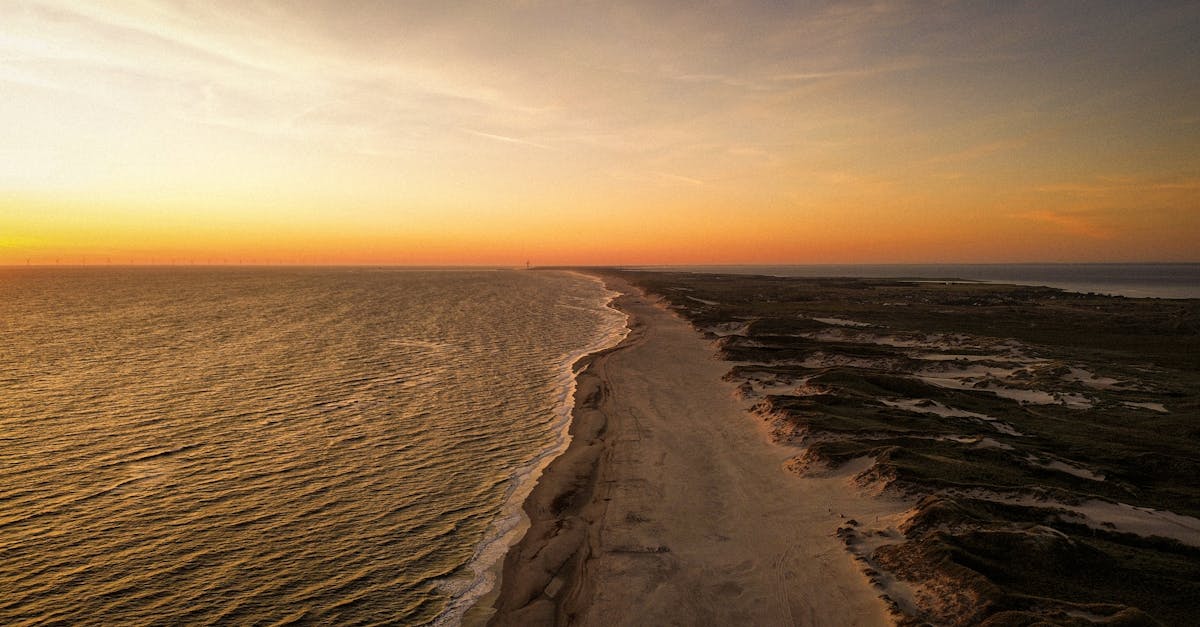
Composition strategies for dramatic seascape and silhouette shots
Composition is the heritage framework that transforms fleeting light into curated images. Treat each frame as a tasting menu where negative space plays the role of restraint.
Silhouettes work because they distill form into symbol; the viewer supplies narrative. Use strong, recognizable shapes—fishing boats, a lone walker, swept nets—to anchor the horizon.
Rule sets and breaking them
Start with classical rules: the rule of thirds, leading lines from tidal currents, and foreground interest anchored on halophilic textures like salt-encrusted rocks. Then, challenge these conventions by embracing minimalism—large expanses of sky or reflective sand that render composition into tonal poetry.
When placing the horizon, err on the side that supports the story. A low horizon emphasizes sky and sunset colors. A high horizon foregrounds a glossy seascape reflecting the dying light.
Layering for depth
Create layers: foreground texture, mid-ground action, and distant horizon. A shallow depth of field can isolate a tidal subject, but for seascape drama, opt for deep focus so that each layer contributes texture.
Use natural elements as compositional anchors: driftwood with sun-bleached grain, lobster pots with artisan rope, or a line of sun-bleached sea glass. These lend provenance and a tactile charm.
Lists of composition tactics
- Leading lines: use ripples, rock ridges, or jetty planks to guide the eye.
- Foreground anchor: shells, salted rocks, or brined kelp for tactile presence.
- Negative space: expansive sky to emphasize silhouette shapes.
- Symmetry and reflection: mirrored pools during low tide for refined double-vision.
- Frame within a frame: natural archways or cliff mouths to create depth.
Pro-tip: during low light, tether the camera to a sturdy tripod and use a cable release or timer to eliminate micro-vibrations; an artisanal carbon-fiber mount will remain stable on wet rock.
Isla Marlow’s method: arrive 45 minutes early and map five potential frames. One frame becomes primary as light descends; the others serve as adaptive backups if tide or wind changes. This disciplined scouting yields decisive compositions.
End insight: composition dictates the viewer’s journey across the photograph, converting sea and sky into an organized, heritage-quality narrative.
Long exposure, shutter craft, and controlling motion in a seascape
Long exposure is where time becomes texture. It converts motion into silk, and in doing so, it abstracts waves into tonal ribbons that complement the solid, tactile presence of shore elements.
Choosing shutter duration calibrates the balance between detail and abstraction. Short exposures freeze spray; long ones smooth it into ribbons. Both outcomes are valid when aligned with intent.
Practical workflow for long exposure
Begin with a sturdy tripod anchored below the high-water line. Use a remote shutter or built-in timer to avoid shake. Apply a circular polarizer to reduce glare when necessary.
Neutral density filters are indispensable: start with a 3-stop for gentle smoothing, move to 6–10 stops for pronounced silk. Test exposures by increment: 1s, 5s, 15s, and 30s, noting how tide speed alters textural results.
Managing highlights and silhouette balance
When the sun remains in the frame, protect highlights. Employ graduated ND filters to control the bright sky while keeping foreground detail intact. Alternatively, bracket exposure and blend in post.
Silhouettes demand crisp outlines. Backlight the subject against the sun and expose for the sky to render the subject as a pure shape. Keep edges clean by distancing the subject from reflective surfaces that cause haloing.
Case study: the cliffside villager series
A curated series shot along cliffside villages in Europe relied on long exposure to juxtapose the rough, brined textures of stone and the softened movement of tide.
Field notes: shot at f/11, ISO 100, with a 10-stop ND at 12 seconds produced a velvety foreground wash while maintaining the stone’s granular detail. The series was later exhibited with a fine-gamut print process to preserve the sunset colors and halophilic sheen.
cliffside villages in Europe served as inspiration for site-specific techniques—stone texture, salted ropes, and heritage boats all required adjustment in shutter craft to harmonize motion and solidity.
Pro-tip: time exposures to the rhythm of waves; photograph on the down-swell for more predictable water movement and cleaner horizon lines.
End insight: mastering long exposure allows the photographer to compose with time as readily as with space, producing images that read like refined studies in motion.
The gear, scouting, and artisanal habits every coastal photographer should cultivate
Gear is a toolkit, not a shorthand for expertise. Select equipment that complements the environment and the final output method—gallery print, editorial spread, or curated online portfolio.
Start with a robust tripod, weather-sealed camera bodies, and a selection of lenses: a wide-angle 16–35mm for sweeping seascape vistas, a 24–70mm for compositional flexibility, and a fast 50mm for low-light silhouette work.
Essential accessories
- Graduated ND filters: control sky versus foreground balance.
- Neutral density set: for long exposure control across varied light.
- Remote shutter release: eliminate camera shake during long exposures.
- Microfiber cloths and lens hoods: for managing brined spray and salt residue.
- Lightweight carbon-fiber tripod: stable on rock yet portable between coves.
Scouting rituals and timing
Successful coastal shoots hinge on reconnaissance. Check tide charts, wind direction, and local fishing activity. Arrive early to note how light silhouettes objects and how tide lines shift compositional possibilities.
Isla Marlow keeps an artisanal scouting notebook: coordinates, wind, tide times, predicted cloud cover, and a small pantry of local culinary notes—types of sea salt encountered, smoked fish vendors—that inform a sensory vocabulary for titles and captions.
Field hygiene and conservation ethos
Respect the littoral environment. Rinse gear with fresh water after each session and remove any brined residue. Use biodegradable gloves when handling live elements. This approach preserves both equipment and the pristine sites that provide visual heritage.
Hamptons luxury weekend tales reveal how heritage destinations balance accessibility with conservation; learn how permitted shoot zones and local knowledge yield superior images without ecological cost.
Pro-tip: carry a pocket-sized desiccant pack in the camera bag to absorb moisture overnight; it preserves electronics and prevents corrosion from halophilic air.
End insight: cultivating artisanal habits—careful scouting, conscientious gear maintenance, and an ethic of conservation—ensures a sustainable practice and consistently exquisite results.
The Bottom Line
Refined coastal photography transforms transient light into curated, heritage-quality images by pairing technical rigor—tripod discipline, long exposure craft, and calibrated composition—with sensory storytelling drawn from maritime culture and culinary parallels.
Take the next shoot as a small expedition: scout like an archivist, shoot like a conservator, and frame each sunset as an artisanal offering to the viewer.
Stay Salty.