Salt-swept terraces and vertiginous lanes define the most seductive cliffside villages in Europe, where heritage architecture meets the sea’s raw choreography. These littoral settlements combine artisanal hospitality, halophilic microclimates, and centuries of maritime culture to create travel experiences that feel curated and timeless. From the pastel cascade of the mediterranean coast to the white chalk arches of Normandy, each place offers distinct sensory signatures: sun-bleached facades, umami-rich seafood prepared with brined anchovies and local fleur de sel, and panoramic vantage points that reward the patient traveler. Readers will encounter practical logistics for accessing remote hamlets, expert tips on savoring authentic coastal cuisine, and guidance on the best hiking trails and private excursions to maximize scenic views with minimal crowds. The editorial thread of La Fisheria’s curated voyages—represented by the hypothetical vessel MV Maris—ties these varied landscapes together, offering a model itinerary for upscale explorers who value refined solitude and genuine local craft. Expect detailed advice on seasons, micro-climates that affect sea-salt harvest and grape terroir, and preservation-minded practices that sustain these tourist spots for future generations.
- Iconic cliffside villages to prioritize: Positano, Santorini, Manarola, Bonifacio.
- Best times to visit: shoulder seasons for light and fewer crowds—late April–June, September–October.
- Must-do experiences: private yacht charters, vineyard terraces tasting, guided coastal hikes.
- Practical notes: transport limits, local conservation rules, and advanced bookings for boutique hotels.
- Travel ethos: choose artisanal producers, respect heritage sites, and favor low-impact excursions.
Positano and Ravello: Mediterranean Coast Icons for cliffside villages in Europe travel
Positano’s terraced cascade is the archetype of coastal towns where architecture becomes landscape. The pastel houses seem to grow from the rock, each stair and alley calibrated for views of the Tyrrhenian Sea. Visitors seeking a refined escape should plan for early-morning promenades when the light is soft and the lanes are quiet.
Setting, architecture, and curated hospitality
Both Positano and nearby Ravello sit within a narrow band of micro-climates shaped by the Amalfi headlands. Oceanic breezes moderated by limestone masses create a halophilic environment that favors citrus orchards and terraced viticulture.
Upscale lodging here emphasizes heritage restoration: boutique hotels often occupy converted palazzi with sun-bleached courtyards and sea-facing loggias. Book a suite with an artisanal olive-wood terrace grill on the property for a true culinary immersion into the littoral tradition.
Gourmet maritime experiences and pro-tips
Local chefs favor brined anchovies, preserved with coarse sea salt that captures the region’s halophilic minerals. A professional tip: request dishes seasoned with harvested fleur de sel from the Amalfi lagoons when available; the crystalline edge elevates simple grilled fish.
For grilling, seek restaurants that use aged olive wood or maritime oak. These woods impart a refined, slightly resinous smoke that complements the natural umami of Mediterranean seafood.
- Private beach clubs offer curated sunbeds and boat-to-boat dining—reserve in advance.
- Yacht charters departing Amalfi are ideal for discovering hidden coves and artisanal fishers’ stalls.
- Culinary workshops on local preserving techniques reveal the region’s brining traditions.
Seasonal considerations inform every choice. The sirocco and mistral patterns can alter sea conditions within hours, affecting yacht itineraries and cliffside dining comfort. Plan flexible transfers with local operators who monitor littoral weather in real time.
Example itinerary fragment: a dawn walk through Ravello’s terraced gardens at Villa Rufolo, followed by a mid-day private boat to Positano for a grilled scorfano at a family-run trattoria. This pairing illustrates the harmonious balance of refined hospitality and authentic culinary practice.
Key insight: Positano and Ravello are best experienced through a sensory lens—light, salt, and smoke—where every meal and vista is part of an artisanal coastal narrative.
Santorini and Oia: volcanic caldera drama among Europe travel scenic views
Santorini offers geological spectacle and sun-bleached elegance in equal measure. The island’s caldera cliffs preserve a complex volcanic heritage that informs both architecture and cuisine. Whitewashed domes and blue cupolas punctuate cliffs that drop hundreds of metres to the Aegean’s cobalt basin.
Geological heritage and architectural refinement
The caldera’s volcanic substrate creates unique terroirs for micro-viticulture. Wines from Santorini are noted for saline minerality and concentrated aromas; pairings with umami-rich dishes enhance structural balance.
Buildings are often carved into lava fields, creating natural insulation. Seek out villas with plunge pools cut into volcanic rock for a sensory interplay of heat-retaining stone and cooled seawater breezes.
Luxury stays, private charters, and sensory notes
High-end travelers favor private catamaran charters that allow for sunrise cruises around Red Beach’s basalt cliffs and a drop anchor near Akrotiri for snorkeling. Culinary experiences focus on local brined capers, sun-dried tomatoes, and preserved fish.
Pro-tip from coastal culinary curators: request dishes finished with indigenous halophilic salt crystals harvested from the island’s shores to accentuate the wine’s saline profile.
Timing is crucial. Crowds concentrate at Oia for sunset; an early evening arrival secures better light for photography and a quieter dining experience. For a different light quality, visit Fira’s Three Bells at midday when shadows sculpt the white façades.
Hiking trails between Fira and Oia reward the patient traveller with unrivalled scenic views. The route contains a series of terraces and viewpoints that frame both the caldera and the floral-dusted inland villages.
- Best hike: Fira to Oia for layered caldera vistas; depart early to avoid peak heat.
- Boat option: private sunset charter with an onboard chef preparing brined seafood and grilled octopus over olive-wood embers.
- Accommodation tip: select cliff-cut suites with shaded terraces facing the caldera rim.
Key insight: Santorini’s appeal fuses volcanic provenance with curated luxury; understanding the island’s geological voice enhances every sensory encounter.
Cinque Terre and Manarola: artisanal coastal towns with hiking trails and nature landscapes
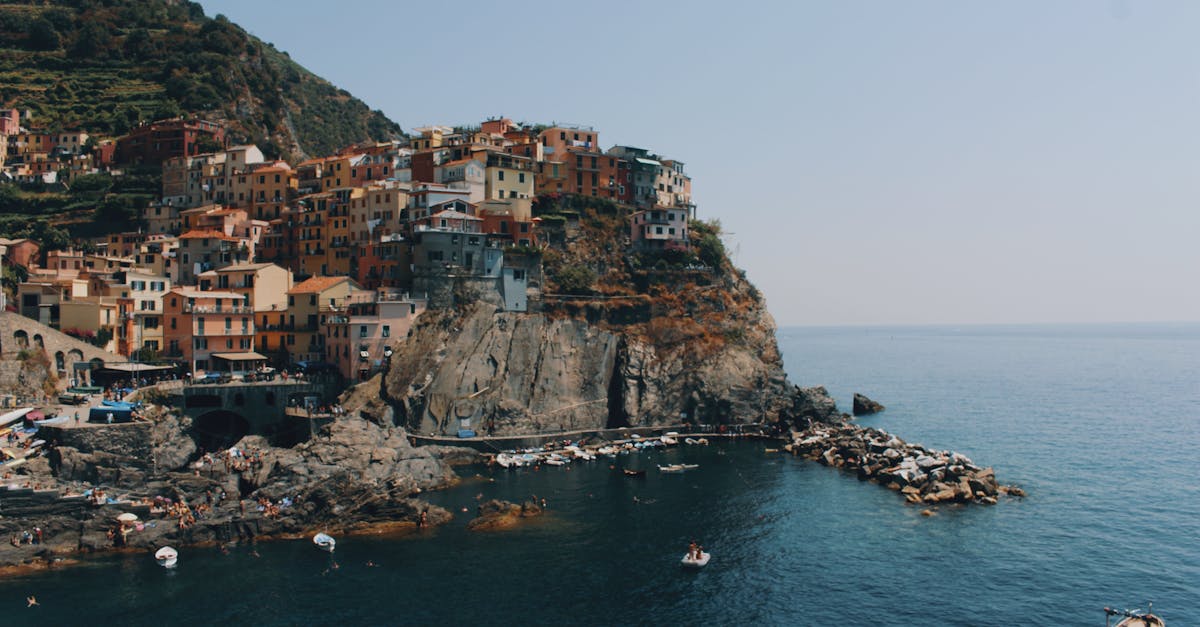
Cinque Terre remains the definitive study in how terraced viticulture and artisanal fishing can cohabit precarious cliff faces. Manarola’s stacked houses and coastal terraces exemplify an economy crafted around sea and vine, where nature landscapes and human labor create extraordinary scenic views.
Terraced vineyards, maritime cuisine, and cultural heritage
The steep terracing imposes manual viticulture that favors indigenous varieties like Sciacchetrà. These sweet and dry expressions reflect sun exposure and sea-spray influence, producing wines that complement oily fish and briny condiments.
Manarola’s fishers historically used simple brining methods and sun-cure dry techniques, preserving catch with coarse, halophilic sea salt. Seek out family-run trattorias that still salt and age anchovies in terracotta jars—the result is a concentrated umami seasoning prized by culinary connoisseurs.
Hiking trails, visitor flow, and pro traveler tactics
The Sentiero Azzurro and path network link the five villages and create an unbeatable hiking experience. Trails alternate between engineered stone steps, coastal paths, and vineyard switchbacks. Wear robust footwear; many segments are uneven and exposed to marine spray.
- Trail tip: hike from Riomaggiore toward Monterosso at first light for cooler temperatures and empty viewpoints.
- Dining trick: order the catch of the day with a splash of locally harvested sea salt and a drizzle of aged Ligurian olive oil.
- Conservation note: limit drone use and respect trail closures instituted to protect terraced stonework.
Examples of curated experiences: an artisanal pesto-making class in a clifftop kitchen, followed by a private coastal walk to a secluded cove where a local skipper serves grilled sardines over olive-wood embers.
Key insight: Manarola and the Cinque Terre are living demonstrations of heritage resilience where culinary craft and terraced agriculture sustain both community and visitor curiosity.
Bonifacio, Dubrovnik, and Étretat: rugged cliffs, fortified heritage, and scenic views in European travel destinations
These cliffside locales present three distinct faces of littoral drama: Corsican limestone precipices, Adriatic fortresses, and Norman chalk arches. Each invites a refined traveler to read the landscape as both a natural archive and an architectural response to maritime forces.
Bonifacio’s limestone ramparts and curated exploration
Bonifacio’s citadel perches on compacted limestone carved by centuries of wind and waves. Narrow alleys funnel the sea breeze, offering respite from inland heat. Private boat tours along the base reveal caves and stacks accessible only at low tide.
Gourmet itineraries include tasting sessions with Corsican charcuterie paired with brined capers and artisan sea salts recovered from nearby littoral marshes.
Dubrovnik’s fortified elegance and private cove excursions
Dubrovnik merges medieval ramparts with cliffside promenades. Luxury operators provide private яхт charters into the Elaphiti isles, where secluded anchorages reward with pristine snorkel sites and shore lunches of grilled scampi.
Pro-tip for heritage-minded guests: arrange a guided after-hours walk along the city walls to study mason marks and restoration layers that chronicle seismic and wartime repair.
Étretat’s chalk cliffs and artistic light
Étretat’s white cliffs generate a unique luminosity that captivated 19th-century painters. The natural arches and needle-like stacks shift color through the day, making it a magnet for photographers and nature-lovers.
- Best vantage: climb to the cliff tops at dawn to catch the chalk cliffs in cool, directional light.
- Cultural stop: visit local galleries that interpret the region’s artistic heritage and coastal ecology.
- Access note: combine a coastal drive with short hikes for varying perspectives of the arches.
These destinations illustrate how defensive architecture and maritime craft adapted to sheer cliffs and turbulent seas. They are ideal for travelers who prize heritage narratives as much as scenic views.
Key insight: Bonifacio, Dubrovnik, and Étretat reward curiosity with layered histories where stone, sea, and human ingenuity converge.
Hidden gems and practical logistics for beautiful villages and nature landscapes across Europe travel
Monsaraz, Gimmelwald, and Portmeirion illustrate an alternative current of cliffside and hilltop charm—intimate, heritage-driven, and decidedly artisanal. These places highlight preservation, low-impact tourism, and distinctive local economies that remain outside mass-market circuits.
Monsaraz, Portugal: hilltop heritage and night-sky vistas
Monsaraz offers whitewashed lanes and ramparts with views over the Alqueva reservoir, a landscape now prized for stargazing. Its medieval castle and quiet streets are ideal for slow travel, with family-run pousadas serving regional wines and olive-oil-forward cuisine.
Practical note: Monsaraz is best reached by car; local roads are narrow but offer rewarding scenic panoramas between Évora and the Spanish border.
Gimmelwald, Switzerland: alpine littoral of a different sort
Though not coastal, Gimmelwald sits on a precipice above the Lauterbrunnen Valley, offering a cliffside sensibility in alpine form. Access is by cable car or foot, and the village’s car-free ethos preserves silence and views of the Jungfrau massif.
Example experience: overnight in a chalet, wake to cowbells and alpine air, then descent to valley floors for river-side picnics using brined mountain trout—prepared simply over local wood coals.
Portmeirion, Wales: architectural fantasy and curated gardens
Portmeirion blends Italianate motifs with coastal Welsh topography. The village’s theatrical piazza and campanile recall Mediterranean prototypes while preserving Cornish and Welsh coastal ecology. It’s a study in invented heritage that nonetheless supports conservation-minded tourism.
- Transport tips: plan transfers with flexibility; many hidden gems require local drivers or timed cable-cars.
- Booking advice: reserve boutique hotels and guided excursions weeks in advance during the high season.
- Sustainability note: prioritize producers practicing regenerative agriculture and artisanal fishing to support the long-term health of these communities.
These offbeat villages prove that elegant escapes need not be synonymous with crowds. They reward patience, respect for heritage, and a taste for curated, artisanal experiences that highlight local materials and maritime techniques.
Key insight: Seek destination stewardship—choose operators who prioritize preservation and community benefit to ensure these beautiful villages endure.
The Bottom Line
Choose curiosity, travel with restraint, and savor every halophilic detail that cliffside villages in Europe reveal. Stay Salty.